A Revolutionary Portrait of the Modern American Psyche
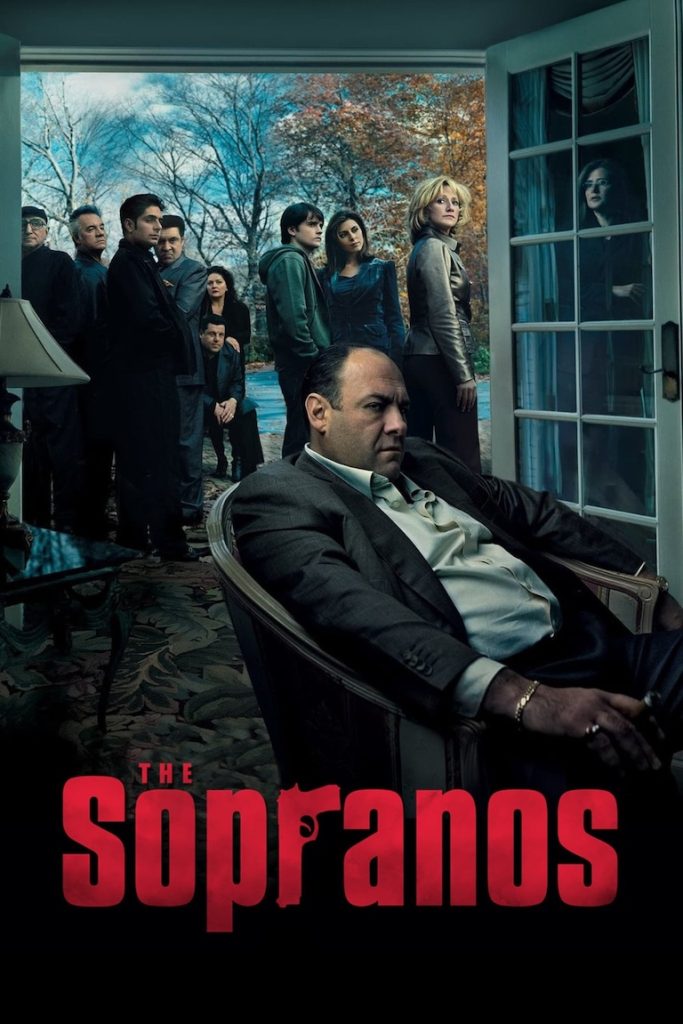
When ‘The Sopranos’ premiered on HBO in January 1999, television changed forever. What began as a show about a mob boss juggling his family and criminal life evolved into a profound exploration of morality, psychology, and the fragility of the American Dream. Created by David Chase, the series ran for six seasons, concluding in 2007 with one of the most talked-about endings in TV history. ‘The Sopranos’ was a cultural landmark that redefined television storytelling — one that still speaks, uncomfortably at times, to who we are.
The Antihero Revolution
Tony Soprano (the late James Gandolfini) is one of television’s greatest contradictions: a brutal mob boss plagued by panic attacks. His therapy sessions with Dr Jennifer Melfi (Lorraine Bracco) peeled back the layers of his psyche, revealing to the viewer, a man as fragile as he was fearsome. The genius of the show lies in that tension — the coexistence of tenderness and savagery within one deeply flawed human being.
Before Tony Soprano, television’s leading men were heroes. Moral ambiguity became the buzz words of the antiheroes to follow Tony Soprano. We saw Walter White, Don Draper, Dexter Morgan — all spiritual descendants of New Jersey’s troubled don. Chase didn’t just give us a gangster; he gave us an ability to look inward at ourselves. Tony’s endless self-justifications, his attempts to intellectualise his own depravity, reflected something recognisable in all of us: the ability to rationalise wrongdoing when it serves our needs.
Family — Blood and Business
At its heart, ‘The Sopranos’ is about family in every sense of the word. At home, Tony is a husband and father; at work, he is a boss and patriarch. The parallels between these two “families” are striking. Both operate on loyalty, hierarchy, and fear.
Carmela Soprano (Edie Falco) embodies the moral conflict of complicity. She wants salvation but can’t resist luxury. She prays for forgiveness between shopping trips. Her faith provides comfort but never conviction. The result is a quietly devastating portrait of a woman who knows she’s compromised but refuses to give up comfort for conscience.
Tony to Carmela: “You knew every step of the way where the money comes from, you walk around in that mansion in your five-hundred-dollar shoes and diamond rings and you act like butter wouldn’t melt in your mouth, you don’t want it to get ugly? Too late”
Their children, Meadow and A.J., inherit the fallout of Tony’s contradictions. Meadow sees her father’s hypocrisy but receives all the help she needs from it. A.J. becomes paralysed by the very privilege his father fought to provide.
Tony’s criminal “family” mirrors his home life. Loyalty is constantly tested; love is tangled with violence. Characters like Paulie Walnuts, Silvio Dante, and Christopher Moltisanti embody different sides of Tony’s own fractured self — superstition, loyalty, and ambition. Christopher especially, stands for Tony’s thwarted idealism: he wants to be legitimate, to create something lasting, but addiction and insecurity drag him down. His death is less murder than mercy killing — an act that exposes Tony’s final, fatal inability to love.
The Therapy Room: Television’s Confessional Booth
Putting a mob boss in therapy was nothing short of genius. It was revolutionary. Through Dr Melfi, Chase gave the series an intellectual and emotional core — a base from where guilt could be dissected rather than merely endured. The therapy scenes serve as both narrative device and moral crucible, forcing Tony (and us) to confront uncomfortable truths.
Lorraine Bracco’s Melfi is composed, curious, and quietly terrified, although this doesn’t often make an appearance. She listens, challenges, and occasionally recoils. Her decision not to let Tony avenge her own assault — one of the show’s most haunting moments — is a profound act of restraint. She recognises that vengeance would validate the very cycle of violence she studies. It is one of television’s purest moral stands, and one that left a lasting mark on the audience.
The Banality of Evil
What makes ‘The Sopranos’ so unnerving is not its violence — it is the normalcy we see. Murder and betrayal sit alongside backyard barbecues and family dinners. Tony beats a man half to death and then goes home to eat. Chase wasn’t glorifying brutality by any means; he was illustrating just how easily we as a culture have learned to compartmentalise it.
The mob could almost be a metaphor for corporate America — where loyalty, greed, and ambition intertwine in equally ruthless ways. The show suggests that evil does not lurk in shadows but thrives in the suburbs. Tony’s world isn’t alien; it is uncomfortably familiar.
The genius of Chase’s writing is how it manipulates empathy. We laugh with Tony, admire his cunning, even root for him. Then we are forced to question why. ‘The Sopranos’ turns the audience into accomplices, holding up a mirror to our fascination with moral decay.
A Mirror to American Culture
Over it’s time on HBO, the show captured the anxieties of its era — pre- and post-9/11 America — but its critique of capitalism, masculinity, and identity remains timeless. Tony’s panic attacks could be defined as demonstrative for a nation on edge: overstimulated, overindulgent, and spiritually hollow.
Chase’s America is one where consumption replaces meaning. The show’s obsession with food — endless scenes of pasta, meat, and cannoli — becomes a trademark. Everyone is always feeding, but no one is ever satisfied. The image of Tony standing by his pool, staring at the ducks he cannot bear to lose, is symbolic perfection: a man terrified not of death, but of emotional attachment.
Gender, Power, and the Price of Survival
Despite its masculine exterior, ‘The Sopranos’ offered some of television’s sharpest insights into female survival within patriarchy. Carmela’s quiet despair, Dr Melfi’s ethical boundaries, and Adriana La Cerva’s tragic arc all reveal the cost of existing in a world built by men and ruled by fear.
Livia Soprano (Nancy Marchand), Tony’s mother, is the base of the show’s psychological core — cold, manipulative, and merciless. Her emotional cruelty shapes Tony’s entire worldview. The undercurrent between them is one of the show’s most disturbing elements, suggesting that Tony’s violence is inherited, not learned.
Tony to his mother: “You know, everyone thought Dad was the ruthless one. But I gotta hand it to you. If you’d been born after those feminists, you woulda been the real gangster.”
Adriana, played with heartbreaking sincerity by Drea de Matteo, is another casualty of male control. Her death, engineered by the men who claim to love her, is still one of television’s most emotionally wrenching moments. In ‘The Sopranos,’ women rarely have power — but they see the truth most clearly.
Writing, Symbolism, and Subtext
David Chase’s writing team — including Terence Winter, Matthew Weiner, and Robin Green — treated television like literature. Dialogue was layered with irony, subtext, and symbolism. Every silence mattered. Dreams became psychological windows into guilt, repression, and self-delusion.
Recurring symbols such as the ducks, the bear, the boat “Stugots,” and all of Tony’s recurring dreams offered glimpses into his subconscious fears. The show rewarded careful viewers who understood that nothing, not even a passing line, was accidental.
Episodes like “College,” where Tony kills a former mobster while on a college tour with Meadow, encapsulate the show’s contradictions: tenderness and brutality, love and control, life, and death — all in one hour of television.
Acting: The Human Face of Tragedy
“The key to playing a complex character like Tony Soprano is finding the humanity within the darkness.”
James Gandolfini
James Gandolfini’s performance as Tony Soprano remains unparalleled. His presence is volcanic — charming one moment, monstrous the next. Gandolfini made Tony believable not because he was extraordinary, but because he was ordinary. His heavy breathing, awkward silences, and flashes of self-awareness made him terrifyingly real. Stories reign about the level of depth and complexities that James Gandolfini added to his performance. It has been said that he put rocks in his shoes to enable him to ‘walk in pain.’ If he needed to look terrible for a scene, he would stay up all night to get in character. His dedication to the role was something special.
Edie Falco’s Carmela matches him in emotional depth. Her quiet breakdowns, her spiritual longing, her moments of defiance — all ground the show’s moral chaos in something heartbreakingly human.
The ensemble cast, from Michael Imperioli’s tragic Christopher to Tony Sirico’s eccentric Paulie, turned caricatures into complex, layered individuals. No one in the show was ever entirely good or entirely evil — they were simply human, which made them unforgettable.
Music, Memory, and Meaning
Music in ‘The Sopranos’ was never incidental. It underscored the show’s emotional heartbeat. That final song, Journeys ‘Don’t stop believin,’ paired with the abrupt cut to black, became instantly iconic. Chase refused to provide closure. Did Tony die? Did life simply go on? The ambiguity was the point. Death, like truth, comes without warning.
Legacy and Cultural Impact
Without shows such as ‘The Sopranos,’ there would be no Breaking Bad, Mad Men, or The Wire. Chase proved that television could be art — morally complex, psychologically rich, and unapologetically slow-burning.
The influence of ‘The Sopranos’ stretches across decades: in tone, structure, and ambition. It taught audiences to expect more and taught creators that audiences could handle it. Twenty-five years later, ‘The Sopranos’ is still as relevant as ever — a masterclass in storytelling that continues to define the modern television landscape.
Conclusion: The Noise of Life
In the end, ‘The Sopranos’ is not really about crime at all. It is about people — flawed, frightened, and endlessly justifying themselves. Tony’s tragedy is not that he’s evil, but that he is self-aware enough to recognise his flaws yet powerless to change them.
David Chase once said he wanted to capture “the noise of life.” He succeeded. ‘The Sopranos’ is noisy with contradiction — funny, cruel, tender, and violent all at once. It remains television’s most human masterpiece, an unflinching reflection of our own moral compromises.
When the screen goes black, we are left alone with the question that haunted Tony from the start: can people really change? For Tony, the answer was no. For the rest of us — Chase leaves that up to interpretation.