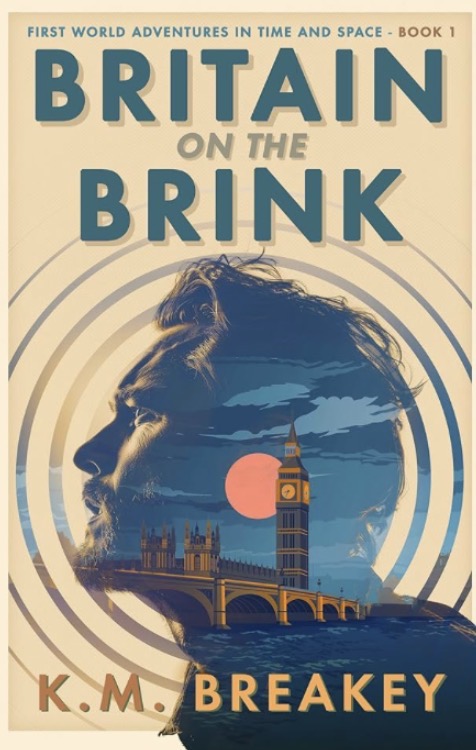
Then comes the novel’s cleverest hook — time travel.
Jack suddenly finds himself stepping back into Britain of the 1960s, and these are arguably the strongest parts of the book. Breakey paints this earlier Britain with warmth and certainty, showing it through Jack’s almost childlike wonder. It is not hard to see where the author’s sympathies lie. This is Britain before, in his eyes, everything started to unravel.
As Jack moves between past and present, the book begins asking the big “what if” question. What if history had turned out differently? What if the choices made decades ago had sent Britain down another road entirely? The introduction of real historical figures, including Enoch Powell, pushes the novel into controversial territory and makes it clear this is more than just a fictional adventure. Breakey is making a political statement and he is not trying to hide it.
That directness is both the book’s strength and its weakness.
There is no denying the passion behind it. You can almost hear the author’s frustration in every chapter, and that gives the novel a certain momentum. However, there are moments when the storytelling takes a back seat to the message. Jack sometimes feels less like a fully developed character and more like the spokesperson for every exasperated dinner-table conversation about the state of the nation.
Still, it remains an interesting read because it dares to mix nostalgia, politics and speculative fiction in a way you do not often see. Even readers who disagree with its viewpoint may find themselves drawn in simply because the central idea is intriguing.
This is not the sort of book you read for gentle escapism. It is written to provoke thought, spark debate and probably annoy a few people along the way. But perhaps that is exactly the point.
Britain on the Brink feels like the fictional version of someone standing in the middle of the street shouting, “How did we get here?” and demanding that somebody finally answer.