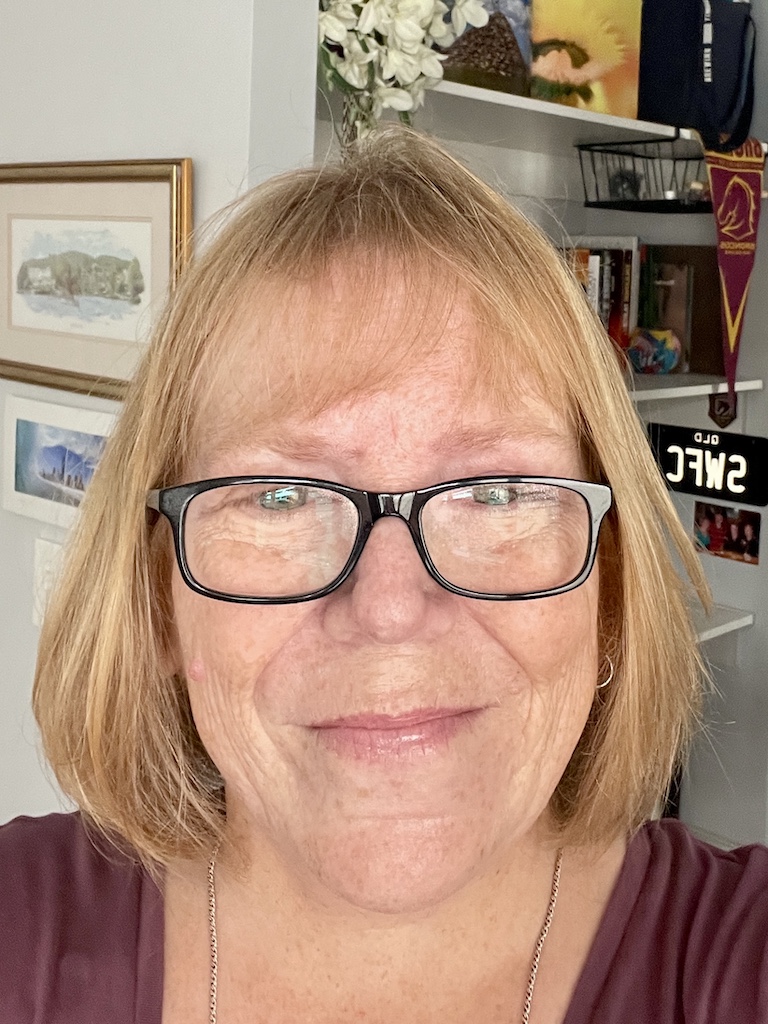
Let’s start at the very beginning.
I was born on Christmas Day, fifty something years ago. I’m British by birth, but Australia has been my home for over twenty years. Emigrating across the world requires a certain kind of courage, not a virtue signalling type of courage, but a quiet and persistent one. Everyone told me I was brave. Me? I replied with, “I’m just moving house.”
Emigrating means leaving behind the familiar and learning to belong somewhere new. I found that the ‘somewhere new’ fitted me like a glove and became familiar very quickly. I will always exist somewhere between the two, carrying pieces of both places with me, that’s only natural. That duality shapes how I see things—with a sense of nostalgia, but also with clarity.
Before writing became the centre of my world, I was a nurse. That role didn’t just teach me skills; it shaped how I understand people. Nursing places you at the centre of humanity in its rawest form. You witness vulnerability, fear, resilience, loss. It demands empathy and strength in equal measure. Although that chapter of my life has ended, it has never really left me. It lives on in how I write, in the way I approach stories, and in my instinct to look beyond what is immediately visible.
My own life had other plans for me. I became a widow. That single word holds more than I could ever fully explain. It’s a loss and grief that is incomprehensible unless you live it. The best way to explain it, is that it steals not only the person, but the life you had planned with them. It steals your past, present, and future.
Grief has a way of reshaping everything—your identity, your sense of time, your understanding of the future. But it did not silence me. If anything, it deepened my need to write. Through my reflections on widowhood, I don’t just explore loss; I explore what comes after—the quiet resilience needed to continue and to get on with life. I always say that I don’t move on, I move forward, taking Mark and my memories with me.
Alongside that, I live with a rare genetic illness, Cowdens Syndrome. It’s another layer to my story, one that could easily have made my world smaller. Instead, I chose to examine it, to understand it, and to write about it. What could have been isolating became something I could share, something I could make visible. Writing about it allowed me to connect—not just with others, but with myself.
My website is, in many ways, a reflection of all of this. It is not just a collection of pieces; it’s a space where my thoughts, experiences, and curiosities come together. In my “Life Talks,” I explore the everyday and the extraordinary, often discovering that they are not so different. I write about books, films, television, poetry, interviews—anything that sparks something in me. I’ve never been interested in staying in one lane. Curiosity has always pulled me in different directions, and I’ve learned to follow it.
One of my greatest passions has been Band of Brothers. What began as admiration grew into something much deeper. I didn’t just watch it; I immersed myself in it. I spoke to cast members, historians, families, and those connected to the real stories behind it. That experience reflects something fundamental about me: when something matters, I don’t stay on the surface. I go further. I ask questions. I dig deeper.
Writing has also allowed me to create in several ways. I’ve published a poetry book and a children’s book, and I’ve ghostwritten a book about caring for someone with dementia. That last project bringing together my nursing background and my writing. It reminded me that the various parts of my life are not separate; they are connected and always will be.
Despite everything, humour has never left me. It weaves its way into my writing, often when it’s least expected. I find it in the everyday—in mirrors that reflect more than just appearances, in “to-do” lists that seem to judge, in the quiet absurdities of life. Humour, for me, isn’t just entertainment; it’s balance. It keeps life from becoming too heavy.
At my core, I am a storyteller. Not just of the obvious moments, but of the quiet ones—the ones that often go unnoticed. I pay attention. I sit with experiences, turning them over until they reveal something more. And then I write, not just to tell a story, but to make sense of it.
If I were asked to define myself, “writer” would be the simplest answer. But it’s never that simple. I am someone who has lived through joy and loss, who has adapted, questioned, and created. Someone who turns experience into words, and words into connection.
I don’t just write stories.
I understand them.