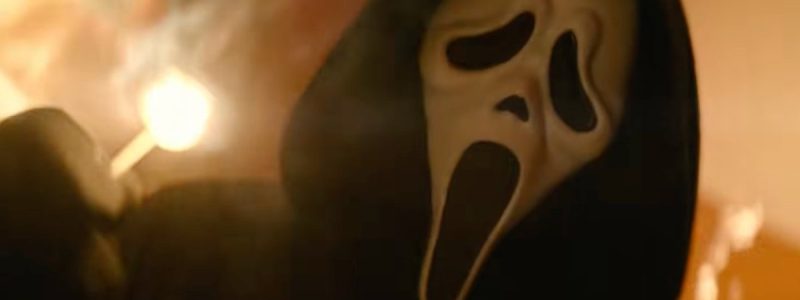
When Scream first sliced its way into cinemas in 1996, it didn’t just revive the slasher genre, it dissected it and rewrote it. Now, thirty years on, we arrive at ‘Scream 7,’ the latest chapter in a saga that has survived changing audiences, evolving technology, and a rotating body count of victims and suspects. Over three decades, Ghostface has stalked multiple generations, yet the central question has always been deliciously simple: who is behind the mask?
As ‘Scream 7’ enters the conversation, it does so with thirty years of blood-soaked nostalgia, and audience expectation resting on its shoulders. The question isn’t just whether Ghostface still kills creatively — it’s whether the franchise can still surprise us after three decades.
On Thursday February 26, I grabbed my popcorn, found my seat, and settled in for the ride. I had high expectations for the movie, and of course, I had my thoughts on who Ghostface(s) would be.
‘Scream 7’ uses its legacy positively, not in a tokenistic, name checking sort of way. The past doesn’t simply linger in the background as a backstory — it presses in, shapes choices, distorts loyalties, and demands reckoning. Old wounds and moments aren’t referenced for nostalgia. They are an active undertone to the narrative. In ‘Scream 7,’ survival does not mean escape — it means living with echoes.
The film is a definition of what it means to live in the shadow of repeated violence. The returning cast bring emotional weight that elevates what could otherwise be a routine slasher flick. Ghostface, as ever, is both a physical threat and a symbolic one: the embodiment of unresolved grief, obsession, and society’s hunger for spectacle and fame.
The screenplay continues the franchise’s tradition of meta commentary, though at times it feels more predictable than sharp. The self-referential humour is present. Film nerd debates, genre dissection, and pointed nods to “requels” and franchise fatigue are all there, but it does occasionally border on repetition.
Visually, the film keeps the slick modern style shown in the recent instalments, but there is also a welcome return to slower dread-filled sequences reminiscent of the original’s stalking scenes. The pacing is brisk, sometimes too brisk in places, leaving certain emotional beats a little under explored. Yet the finale — as tradition demands — unfolds in a layered reveal that is both outrageous and oddly satisfying.
When the film truly leans into suspense, it absolutely delivers. A coffee shop sequence featuring one of our leading ladies, Isobel May, is a standout. Quietly controlled, tightly wound, and brimming with unease. Later, a mid-film set piece unfolding within a claustrophobic confined space proves especially effective, stretching the tension to near-breaking point in a way that recalls the franchise at its absolute best.
The entire cast is given moments to shine. Neve Campbell anchors the story as Sidney Evans, the emotional and moral centre, fiercely protective of her family yet determined to live a full, hard-won life. Opposite her, Isobel May more than holds her own as her daughter, matching Campbell’s presence with a performance that feels both vulnerable and resilient.
There are Easter Eggs and little moments that reflect the other movies in the franchise. You will see elements of the original Scream. There are nods to Scream 3 and 4 in different scenes. Sidney’s leather jacket from Scream 2 makes an appearance. Sidney’s daughters name is in honour to her childhood friend from the original movie. There may (or may not) be images of previous Ghostface killers. One of the younger male characters has more than a few ‘Billy Loomis’ characteristics. One of the Scream 5 deaths is immortalised on a plaque on the wall in the opening sequences. Let’s not forget the biggest Easter egg of all. The Air BnB is Stu Machers house.
What keeps ‘Scream 7’ afloat is its understanding that horror evolves because audiences evolve. The film interrogates not just who the killer is, but why these stories persist. Why do we keep watching? Why does Ghostface keep returning? In an age of true crime obsession and viral infamy, the questions feel pointed.
Is ‘Scream 7’ revolutionary? No. But it doesn’t need to be. Like Ghostface himself, it adapts, recalibrates, and survives. It honours its roots while acknowledging the impossibility of ever fully recapturing 1996’s shock.
And perhaps that is the real trick: not to try and outdo the original, but to remind us why we screamed in the first place.