But do we have to?
It seems to have become fashionable across social media over recent years. Lots of trends and slogans. None more than, “women support women.” It shows its face through social media posts, campaigns in the corporate world, conference stages, and countless articles. The sentiment is that women should champion each other without question. The sentiment is self evident and virtuous. After all, who would object to such support and solidarity.
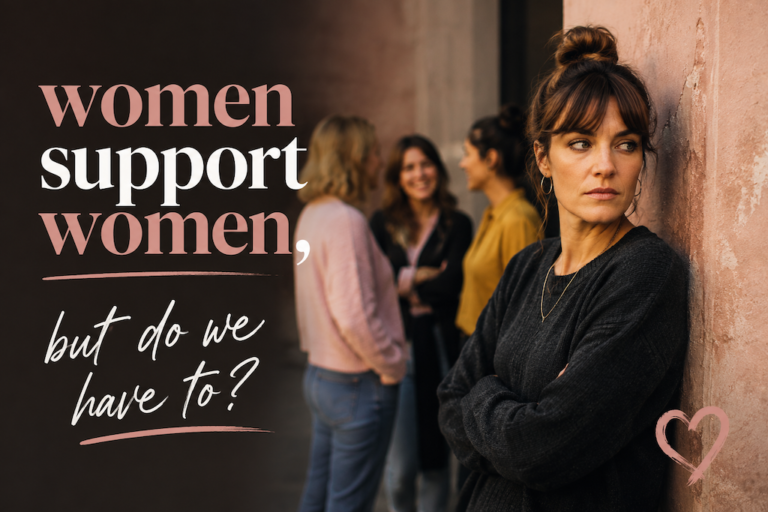
But as just one of the women in this world, I find myself incredibly uncomfortable with the assumptions that are attached to the slogan. It is certainly not because I oppose women succeeding in the workplace. It is not because I do not appreciate the barriers many women continue to face. It is because there is an expectation, an automatic expectation, one that is basely solely on gender.
That expectation strikes me as fundamentally flawed.
Let’s roll the clock back a bit where there was a time for female solidarity to stand front and centre, to have its clear purpose. There was a time where women were denied opportunities. A time where they were excluded from certain professions. A time where they lacked the standings afforded to men. Collective action helped drive meaningful change. It created networks of support and advocacy that enabled women to challenge barriers that would have been impossible to confront alone.
But somewhere between the collective action and potential change, the conversation shifted. Instead of a woman having the qualifications for something, womanhood has become the qualification. In the world today, being female is very often viewed as sufficient reason to support, celebrate, defend, or align oneself with another person. In some circles, questioning that assumption is viewed as an act of betrayal. A betrayal of the sisterhood.
I stand up, raise my hand, and admit that’s me. I question that assumption. I have no issues with betraying the sisterhood.
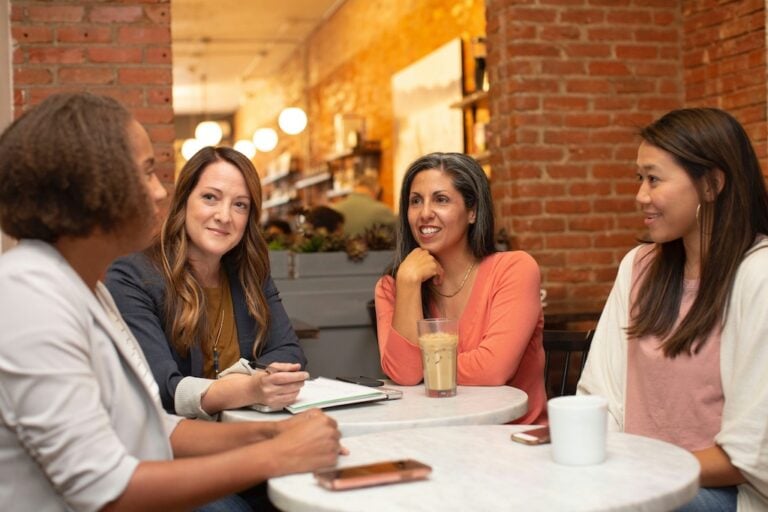
The reality is that women are not defined by identical experiences or beliefs. The idea there is some all-universal female experience is not reality by any stretch of the imagination. It’s a form of aspiration. Put a group of women together and it is an absolute certainty that they will disagree about everything. I am talking, from politics to their careers; from religion to family life, and everything in between. Why? Because they come from a different life. Women have varying cultures and backgrounds. The generational gaps influence thoughts and values. To suggest that a shared biological characteristic should automatically create the strongest bond seems a little too simplistic.
It also ignores the fundamental fact that character is the most reliable measuring tool for all individuals, regardless of gender.
Throughout my life, I’ve met many women. I have met those whose kindness have overwhelmed me. I have been in the company of those women whose integrity and intelligence have astounded and inspired me. But I have also met women who who were manipulative and out for what they can get from the relationship. I have met women who were dishonest and unpleasant, unable to have a civilised discussion about any world views. The same can be said of men of course. Virtue of a person and humanities failings are definitely not distributed to gender. They are part of a person’s personality and moral code; something far more complex.
Yet the language we hear surrounding the sisterhood, often suggests that women owe one another support before those qualities have even been considered. Is that true? Well, here’s my take. I have never felt comfortable with that arrangement.
Women should not automatically get support or respect from other women. It must be earned, not assumed. Admiration should be a gift you give, following achievement. It shouldn’t be something that means you automatically have membership of a gender group. This is hardly controversial. Most of us would reject the notion that all men should support one another simply because they are men. We would rightly question any expectation of automatic loyalty based on race, nationality, or political affiliation. We recognise that blind allegiance can easily become tribalism. Yet when gender is involved, similar expectations are often framed as empowerment.
I am not convinced there is much difference.
There is an inherent danger with this tribal mindset. It encourages selective judgement. A group of people will be more willing to overlook flaws in their group yet identify and judge them in others. It becomes harder to criticise someone as loyalty becomes
The danger of any tribal mindset is that it encourages selective judgment. We become more willing to overlook flaws within our own group and more eager to name them in others. Criticism becomes difficult because loyalty becomes more important than honesty.
This is particularly clear in discussions surrounding female leadership and success. There is often an expectation that women should automatically celebrate those who reach positions of power simply because they are women. Yet surely the measure should be competence and capability, rather than gender alone. A successful leader is worthy of recognition for doing their job. An ineffective leader will garner criticism for failures. This will happen, and should happen, regardless of the gender.
If equality means anything, it must include equal standards of accountability.
I suppose this is why I have never fully adopted the language of ‘sisterhood.’it always feels to me that it is about women as a whole species, rather than unique and incredible individuals who may have achieved something remarkable.
My life experience has taught me the opposite of ‘sisterhood.’
I have formed the greatest friendships of my life on trust and respect, not on gender. Those that I admire most are those whose conduct reflects the values I admire in a person. If I examine my own life, some of the greatest friendships I have had have been male, and some of the worst friendships I have had, have been female.
Life repeatedly shows that goodness, integrity, generosity, and courage are not gendered qualities. Neither are selfishness, arrogance, dishonesty, or cruelty. Why, then, should loyalty be gendered? Why should I stand by all women? Why should I believe all women? Why should I trust all women?
The older I become, the less interested I am in collective identities and the more interested I am in individual character. Age has a way of stripping away simplistic narratives. There is that age old adage about once a woman hits fifty, that they have zero f***s to give! It’s true. Increasing age and life experience enables you to see the world for what it truly is. Age for me, has stripped away the women that are out for what they can get. It has stripped away those that cannot have rational discussion. It has stripped away those that have betrayed trust.
Age also teaches us that human beings rarely fit neatly into ideological categories. The world is not divided into heroes and villains, men and women, allies, and opponents. It is populated by individuals, each carrying their own strengths, weaknesses, convictions, and contradictions. That complexity is worth preserving.
None of it means that we shouldn’t support other women. There are situations where that is not only necessary, but valuable and admirable. Women should mentor and encourage each other. Women should advocate for fairness. But…these actions should stem from principle, not obligation. They should arise from a commitment to justice, kindness, and opportunity rather than from an expectation of gender-based allegiance.
There is an important distinction between solidarity and conformity. One encourages cooperation without sacrificing independent thought. The other demands agreement as the price of belonging. Too often, the modern sisterhood appears to drift toward the latter.
I would rather reserve the right to judge individuals on their own merits. I would rather praise excellence where I find it and criticise failure where it exists. I would rather form friendships based on trust than biology and extend respect based on character rather than identity.
That position may place me outside the sisterhood as it is currently defined. If so, I am entirely comfortable with that.
Because while shared gender may create common experiences, it does not create automatic loyalty. Character still matters more. It always has, and it always will. And if that makes me a reluctant member of the club, then perhaps I was never meant to join in the first place.